
Robots still struggle to replicate the human hand: scientists have revealed the main problem
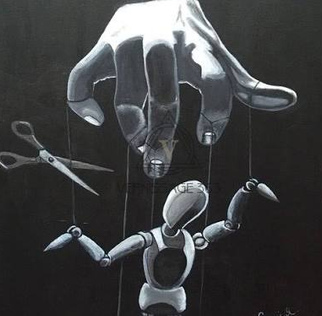
A modern humanoid robot can already run, jump, dance, and even perform a backflip. From the outside, it seems that humanity has almost taught machines to do everything we can do. But ask such a robot to fold a T-shirt, pick up a wet sponge, or turn a key in a lock—and suddenly everything becomes much more complicated. Paradoxically, a backflip may be an easier task for a robot than doing the laundry.
Why a complex stunt turns out to be easier
A backflip is a clearly defined sequence of movements. The robot knows when to push off, how to rotate its body, and where its body should be at every moment. Such an action can be repeated many times under identical conditions. Now imagine a T-shirt.
It may be lying crumpled on the floor, half under another item, or in a completely different state than last time. Fabric deforms, slips, catches on fingers, and changes shape with every movement. For a human, this is hardly a problem. We simply sense what is happening and automatically adjust our movements. For a robot, it is an entire physics challenge.
The human hand is much more complex than it seems
Our hand combines movement, sensation, and control in one compact mechanism. When an object begins to slip, we almost instantly increase our grip strength. If it turns out to be soft, we reduce the pressure. If the item is heavy, we change the position of our fingers.
People do this practically without thinking. A robot, however, has to reproduce it using motors, cameras, force sensors, algorithms, and control systems. And here a serious problem arises: a camera cannot feel an object the way human skin does. It can determine that the robot is holding an egg. But a camera by itself does not know how tightly the robot is squeezing it or whether one more movement will turn the egg into an omelet.
Robots need “touch”
That is why recent research is paying increasing attention to tactile sensors. In 2026, researchers from Zhejiang University combined visual and tactile data with reinforcement learning and online imitation. In trials, the system achieved an 85% success rate on five complex tasks involving 25 different objects.
This is an important step, but not a magic button. A robot must not simply “see” an object. It has to understand exactly where it touched it, how much force to apply, whether the object has started to slip, and how to change its movement if something does not go according to plan.
The home is the worst place for a robot
Robots have it much easier in a factory. There, parts have known dimensions, lighting is controlled, the movement trajectory is repeated thousands of times, and tools are specially selected for a specific operation. In an apartment, everything is the opposite.
A drawer may be open by just a few centimeters. A glass may be half-filled with water. A sponge changes shape when squeezed. A bag has no stable geometry at all.
And a shirt may lie differently every time. That is why a robotic arm cannot simply execute a pre-recorded program. It must constantly observe, sense, predict, and correct its own actions. Moreover, the arm does not exist separately from the rest of the robot. Complex household tasks require coordination between both arms, the correct body position, stable movement, and sufficient reach.
The biggest problem is not mechanics, but data
Modern robots are increasingly not programmed for every movement by hand, but trained. However, this creates another problem: where can enough data be obtained?
To train a system, it is not enough simply to record a video of a person folding a T-shirt. Ideally, one would simultaneously know the robot’s joint positions, camera images, force and torque, as well as data from tactile sensors. Humans have millions of years of “training data.” Every day, we pick up objects, open doors, squeeze sponges, lift cups, and catch things that are falling.
Robots do not have this experience. That is why companies are experimenting with teleoperation, specialized sensors, imitation learning, reinforcement learning, and simulations. The goal is simple: to turn human experience into training data that the robot can use independently.
Everyone is chasing the same superpower
Virtually all major players in humanoid robotics are trying to solve this problem. Unitree G1 can already be equipped with a force-controlled manipulator and tactile sensors. Apptronik is developing Apollo with an emphasis not only on walking, but also on handling objects. Tesla is training Optimus to perform increasingly complex manipulations, while 1X is explicitly directing its NEO toward household tasks.
But demonstrating one successful movement does not yet mean creating a truly universal home robot. The real test will look completely different: the machine enters an unfamiliar apartment and must perform a variety of tasks continuously for eight hours without constant human supervision. This is where the impressive demonstration ends and real engineering begins.
A somersault is not yet a victory
The biggest problem with humanoid robots is not making them move. They have already learned how to move. It is much more difficult to teach a machine to feel the world with its fingertips and react instantly to something it did not expect.
The human hand does this so naturally that we do not even notice how complex a mechanism is at work behind every simple movement. That is why it is quite possible that the future of home robotics will be determined not by the most spectacular somersaults or the fastest runs, but by a robot’s ability to simply pick up a towel — and not drop it.
Thanks to Volodymyr from portaltele.com.ua
Add new comment