
Georgia’s prime minister said that repentance was a condition for the release of convicted protest participants
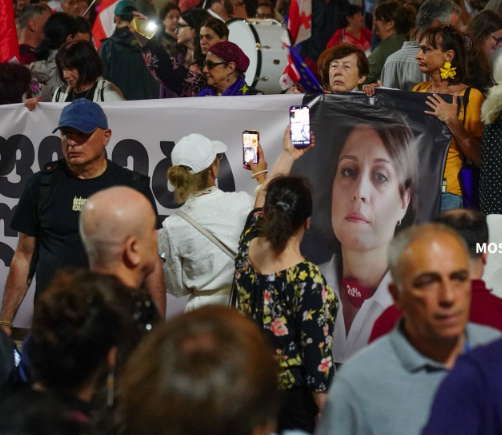
@NGnewsgeorgia. Georgian Prime Minister Irakli Kobakhidze said that there are no “prisoners of conscience” in the country, and that convicted participants in anti-government protests can leave prison if they acknowledge the crimes they committed and repent.
“There are no ‘prisoners of conscience.’ There are prisoners who were involved in violence. Despite the fact that their crimes are quite serious in nature, we are ready to forgive each of them if there is repentance and an admission [of guilt] on their part,” Kobakhidze told journalists during a visit to Batumi.
“If someone repents and acknowledges their crime, appropriate measures will be taken in their regard—in particular, they will leave prison, no matter how serious the crime they committed at the time was; I mean the violence they used during the rallies,” the prime minister said.
Kobakhidze also said that the authorities are already taking appropriate measures regarding those who make such statements. According to him, the government is not changing its position.
At the same time, the prime minister criticized the authorities’ opponents for their negative reaction to the release of protest participants. He said that “radicals” and “foreign agents” are allegedly not interested in convicted individuals leaving prison, since their goal is to further intensify radicalization and polarization.
Kobakhidze’s statement came amid a series of plea agreements with defendants in criminal cases related to protests in recent years. Under such agreements, defendants plead guilty and receive a lighter sentence or are released from serving the remainder of their sentence.
The government’s position differs from the assessment of Transparency International Georgia. In July, the organization published a list of 91 people whom it considers political prisoners. It compiled the list based on the criteria of the Parliamentary Assembly of the Council of Europe.
The list includes opposition politicians, activists, and journalists. According to TI-Georgia, despite the official wording of the charges, each of their cases resulted from the exercise of the right to freedom of expression and assembly.
Add new comment