
Oleshky under terrorists: a city on the brink of a humanitarian catastrophe
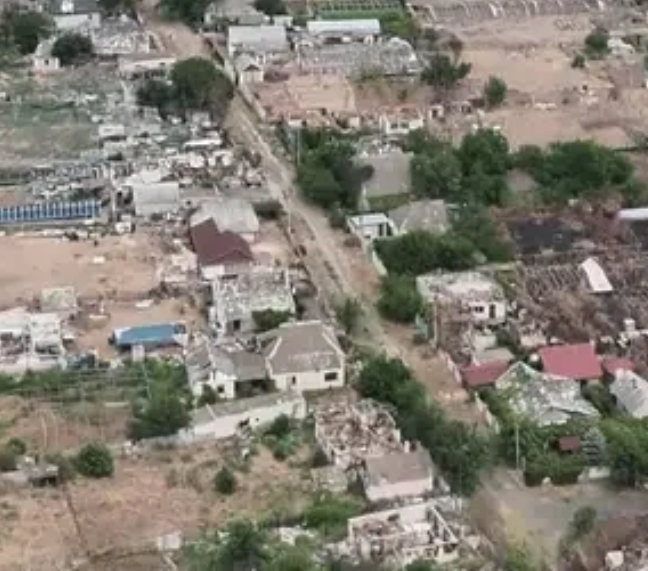
In Oleshky, Kherson region, occupied by Muscovite terrorists, just a few kilometers from Kherson, people have effectively found themselves isolated. The city has long been without normal supplies of food and medicine, electricity and gas, while attempts to leave are associated with the danger of mines and drone attacks. The situation could become particularly acute on the eve of winter. According to volunteers, up to 1,500 people may remain in Oleshky itself, including around 40 children. Another approximately 4,000 residents, including about 150 children, remain in the villages of the Oleshky community.
Oleshky without food, water, or normal communications
The last regular delivery of food to the city took place on May 26, 2026. After that, attempts to deliver food ended unsuccessfully because of mined roads, shelling, and drone attacks. Local residents say that food supplies are gradually running out. In summer, people largely survived thanks to their gardens: they used vegetables, fruit, and greens, and also tried to catch fish or hunt game.
According to eyewitnesses, the situation has deteriorated so much that some residents have been forced to prepare dishes from wild plants. Others go to Radensk, located approximately 20 kilometers from Oleshky, for food. Such trips are dangerous. The roads are mined, open areas are under drone fire, and the journey one way can take several hours. Because of the lack of electricity, residents have almost no opportunity to stay in contact with their relatives. Some people can charge their phones only from generators, so calls sometimes last just a few dozen seconds. Most often, they tell relatives about shortages of food and medicine and the possibility of leaving.
The hospital has remained one of the few places providing assistance
The local hospital remains a separate problem. According to volunteers and people who maintain contact with the city, the medical facility is operating on a severely limited basis. There are shortages of medicines, antibiotics, fuel for the generator, and food for patients. According to the journalists’ sources, the generator can be started only periodically because of the fuel shortage. The hospital has effectively become one of the few places where people can receive at least minimal assistance or spend the night.
At the same time, there are reports of a significant number of people who have died or been killed, whose bodies are being stored in the basement of the hospital because of problems with the morgue. According to representatives of the local authorities and volunteers, some of the bodies may remain there for months.
These accounts cannot be independently verified because Ukrainian journalists have no access to the occupied city. The situation with medical care remains critical: if the hospital stops operating, residents will effectively lose the last place where they can receive even basic assistance.
The roads out of the city have become deadly dangerous
Oleshky is located approximately 9 kilometers from Kherson, but its proximity to territory controlled by Ukraine does not mean that it is possible to leave safely. The city is located near the line of contact. There is a mine threat on the roads, while the movement of people and vehicles is monitored by drones. In June, four vehicles hit mines during one attempt to deliver food to Oleshky. Two people were killed.
The military also say that Ukrainian units monitor the city from the right bank of the Dnipro using drones. According to them, civilians remain especially vulnerable when attempting to move around.
A Ukrainian serviceman quoted by UP said that the Defense Forces are attempting to control the main route that civilians can use to leave the city. At the same time, any movement in this area remains dangerous. According to him, Ukrainian drones can sometimes escort people attempting to leave Oleshky.
Why residents cannot evacuate
The Ukrainian side attempted to organize the evacuation of civilians with the participation of international organizations. However, as of September 22, 2026, Muscovy had not confirmed its readiness to conduct a humanitarian mission. Dmytro Lubinets, the Ukrainian Parliament Commissioner for Human Rights, said that Ukraine continues to appeal to the International Committee of the Red Cross, the UN, and other partners. According to him, the Ukrainian side does not want to name specific dates for the evacuation until Muscovy agrees to the humanitarian mission.
The ICRC, for its part, confirmed that it was maintaining contacts with representatives of Ukraine and Muscovy regarding the situation in Oleshky and stated that it was ready to facilitate an evacuation if conditions allowed it to be carried out safely. However, for the residents themselves, the possibility of an organized departure remains uncertain.
Why people remain in the occupied city
The reasons why residents of Oleshky did not leave earlier vary. For some people, their documents were destroyed after the occupation and the flooding caused by the destruction of the Kakhovka Hydroelectric Power Plant in 2023. Documents are required to leave the occupied territory, and some residents no longer have them.
Another problem is elderly people who do not want to leave their homes or simply do not know where to go after evacuation. Volunteers also speak of fear of Muscovite terrorists' checkpoints and possible inspections. The problem of men of conscription age, who fear forced mobilization into the ranks of the Muscovite terrorists, is mentioned separately.
After the liberation of Kherson in November 2022, some residents expected the Ukrainian military to be able to regain control of Oleshky just as quickly. However, this did not happen. After the destruction of the Kakhovka Hydroelectric Power Plant, many people lost not only their property but also their documents, which made it even more difficult to leave.
Winter may worsen the situation even further
As the cold season approaches, the situation of Oleshky residents may become even more difficult. The city has no stable electricity or gas supply and lacks sufficient medicines and food. According to volunteers, not all of the elderly people who remained in their homes survived last winter.
In autumn, attempts to go out for food independently are still possible, although extremely dangerous. In winter, snow and frozen ground may make it even more difficult to move through mined areas.
Under international humanitarian law, the occupying state must provide the civilian population of the occupied territory with the necessary food and medical assistance. At the same time, the actual situation in Oleshky indicates a large-scale shortage of basic resources.
Ukraine's Foreign Minister Andrii Sybiha raised the issue of the humanitarian situation in Oleshky at a meeting of the UN General Assembly, which is taking place on September 21–26.
While international organizations continue to "be concerned," "be alarmed," and discuss possible mechanisms for assistance, the city's residents remain in conditions where shortages of food, medicines, and electricity, as well as the lack of a safe evacuation route, are combined with the constant danger of hostilities.
Oleshky remains one of the most difficult humanitarian hotspots in the occupied part of the Kherson region. Resolving the situation depends primarily on the ability to provide civilians with humanitarian aid and organize a safe departure for those who want to leave the city.
Add new comment