
How People Who Grew Up Without Siblings Differ
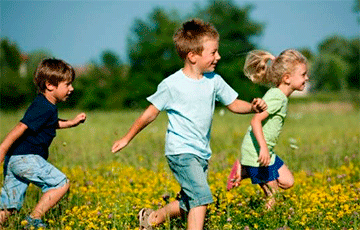
The absence of everyday competition for parental attention creates a unique environment.
Growing up without siblings leaves a deep imprint on personality development, shaping how a person interacts with the world around them, establishes personal boundaries, and copes with everyday tasks. Psychologists and users of online communities often identify a whole range of characteristic traits that unmistakably reveal those who grew up as an only child, writes “Cursor”.
The absence of everyday competition for parental attention and household squabbles with siblings creates a unique environment. On the one hand, this strengthens a person's independence and develops a deep love of solitude, while on the other, it gives rise to specific traits that may seem unusual to those around them. Research and observations by psychologists identify ten key signs that reveal people who grew up without brothers or sisters.
Sweets left in plain sight. Having no experience of fighting over treats, such people calmly leave candy right in the kitchen, feeling completely safe.
Well-developed communication skills with adults. Constant communication with their parents in childhood helps them easily and naturally get along with older people.
Difficulty dividing portions. Fairly dividing a large cake into equal pieces can sometimes be a difficult task for them due to a lack of practice.
Unfamiliarity with minor conflicts. Childhood arguments help develop debating skills, which they often lack in everyday life.
A measured pace while eating. They eat unhurriedly because they have never felt pressure from brothers or sisters competing for food.
Distinctive ways of solving problems. The absence of boisterous childhood games affects certain aspects of immediate reactions and self-analysis.
An attraction to mature company. They find it much easier to maintain an interesting conversation with older people than with their peers.
Moving around without warning. The habit of having sovereign personal space allows them to leave a room silently without reporting their movements.
Extremes in attachment. They may demonstrate complete self-sufficiency or, conversely, seek all-encompassing closeness.
Comfort in solitude. Silence and isolation do not frighten them but bring genuine pleasure and inner peace.
Add new comment