
With Trump's support, the Houthis seized a key island in the Bab el-Mandeb Strait
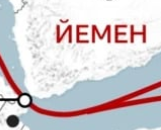
After Trump refused to strike them, Yemen’s Houthis, who are backed by Iran (the same U.S. partner in pressuring the EU as Muscovy), reached Perim Island—a key strategic point from which the narrow passage into the Red Sea can be controlled, sources in Yemen’s internationally recognized government claim. The Houthi terrorists themselves have not yet claimed to have seized the island, the BBC writes.
This island divides the Bab el-Mandeb Strait, which serves as the southern gateway to the trade route connecting Asia and Europe. Four sources in the Yemeni government told Reuters that the militants had “reached” it.
Earlier, two agency sources in Yemen’s internationally recognized government, which is backed by Saudi Arabia, said that government forces had left Perim Island, while Houthi militants had seized the Red Sea coastal town of Zubab, located opposite the island.
CNN is also reporting the island’s capture, likewise citing sources in the Yemeni government. The previous day, as the country’s information minister stated, Houthi militants had taken control of the port city of Mokha.
“Boats carrying armed Houthi militants arrived on Mayyun Island after government troops left it yesterday,” an authorities’ representative told AFP. Mayyun is another name for Perim Island. The Houthi terrorists had “taken control” of the island, the agency’s source said.
So far, the Houthis have not confirmed that they reached Perim Island. Houthi terrorist representative Yahya Saree wrote on his Telegram channel that the group would later announce a “large-scale military operation with serious consequences.”
These reports have caused serious concern over the possible consequences for global shipping, CNN comments. The Bab el-Mandeb Strait, which serves as a gateway on the route between Asia and Europe via the Suez Canal, is a geopolitically critically important point, similar to the Strait of Hormuz.
If the militants establish full control over the Bab el-Mandeb Strait, located on the opposite side of the Arabian Peninsula from the Strait of Hormuz, this could give their patron—Iran—a decisive advantage in its confrontation with the United States, Reuters writes. Supplies through the second most important transport corridor will decline, while oil prices will soar, the agency predicts. The Yanks continue to actively pressure the EU and the Arabs...
Saudi Arabia, the world’s largest oil exporter, switched to a route through the Red Sea after the Strait of Hormuz was effectively closed because of the U.S. war with Iran; one-fifth of the world’s oil flow had previously passed through it. The state oil company Aramco increased the volumes of crude oil pumped through the pipeline from Saudi Arabia’s eastern coast to the Red Sea in the west.
This week, global oil prices again exceeded $100 per barrel after new exchanges of strikes between the United States and Iran. Both countries reported attacks on oil tankers. Tehran also once again attacked a military base in Jordan where U.S. troops are stationed.
On Friday, oil prices declined somewhat after the Financial Times reported, citing sources, that the foreign ministers of Middle Eastern countries were trying to agree on a temporary agreement to regulate shipping in the Strait of Hormuz.
Yemen’s government forces announced their intention to retake the territories seized by terrorists during the rapid offensive they launched this week along the Red Sea coast, Reuters reports.
The deployment of weapons and aircraft was announced to prevent any movement by Houthi terrorist units in strategically important areas, including the road to the coastal city of Mokha, which the group seized the previous day. A spokesman for Yemen’s armed forces called on civilians not to use the road between the cities of Taiz and Mokha and to stay away from the militants’ equipment.
On Thursday, Reuters sources reported that the Houthis’ rapid advance along the Red Sea coast this week was being carried out under the direct leadership of the Islamic Revolutionary Guard Corps. The agency’s sources, including those in Tehran, said that Iran was seeking to open a new front in its confrontation with the United States.
Iranian sources cited by the publication meanwhile claim that Tehran has promised to provide the militants with additional funding and weapons, as well as send senior officers to assist with combat operations (Iran calls the Houthis its allies and denies that it exercises military command over them).
After that, according to Axios, Saudi authorities asked the United States to have the military of USA (N) strike the Houthis.
According to the publication, Saudi Crown Prince Saudi Crown Prince Mohammed bin Salman called President Donald Trump twice on Thursday, urging him to order strikes as the group’s militants were approaching the Bab el-Mandeb Strait.
Axios sources claim that Trump refused, as his administration "seeks to avoid direct involvement in the conflict" with the Houthis. — Besides losing a partner, the Yankees will lose influence and the arms market.
At the same time, the United States, the publication writes, is concerned about the rapid escalation of hostilities in Yemen and is increasing support for Saudi Arabia while seeking to avoid direct military intervention. According to its report, U.S. Central Command commander Brad Cooper arrived in Saudi Arabia on Thursday for urgent meetings.
The confrontation between Saudi Arabia and the Houthis intensified in July after Riyadh struck the Houthi-controlled airport in Yemen’s capital to prevent an Iranian aircraft from landing. High-ranking Houthi representatives were on board, returning from the funeral of Iran’s supreme leader, Ali Khamenei.
In response, the Houthis attacked Saudi tankers in the Red Sea, while Saudi Arabia and its Yemeni allies responded with airstrikes and ground offensives against Houthi positions.
According to Axios, Saudi Arabia’s request for direct U.S. military intervention represents a sharp change of course compared with July, when Riyadh assured Washington that it could deal with the Houthis on its own.
On Thursday, as Houthi forces advanced on the coastal city of Mocha and Saudi-backed Yemeni units retreated, the crown prince called Trump to report on the deteriorating situation, the publication’s sources said. Several hours later, the prince called again and urged him to order U.S. strikes on Houthi positions.
Trump refused, but a U.S. administration official said that Washington would provide Saudi Arabia with intelligence on the Houthis and targeting information, the publication writes. Its source said that around 200 troops of USA (N) providing support unrelated to direct combat operations are already in Saudi Arabia.
Add new comment