
Systemic solutions for Turkey
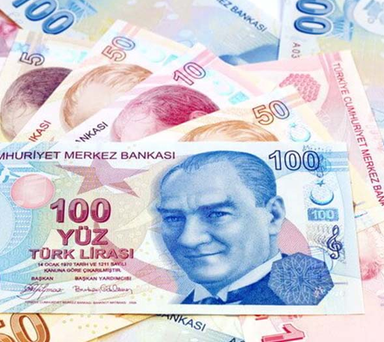
For Turkey, it is worth dividing the problem into two levels.
The first is macroeconomic instability: high inflation, low predictability of the lira, a high cost of capital, and dependence on external energy prices.
The second is the structure of the economy itself: productivity is not growing fast enough, a significant share of investment goes into less productive assets, some human capital is underutilized, and a substantial share of exports remains in segments with medium added value.
So my model would be as follows:
first make money predictable → then redirect capital from consumption, real estate, and protected sectors into productivity → simultaneously improve the quality and utilization of human capital.
This is more important than simply “developing high-tech.”
The current situation
As of September 10, 2026, the Central Bank of Turkey is indeed holding its key rate at 37%. The CBRT itself, meanwhile, reports that the underlying inflation trend is slowing, but high energy prices remain a significant risk. TCMB
In June 2026, the OECD forecast Turkey’s GDP to grow by 3.1% in 2026 and 3.8% in 2027, while expecting annual inflation to fall below 20% in the first half of 2027. Thus, Turkey is currently not so much in a classic economic crisis as in a difficult transition from an inflationary growth model to a more stable one. OECD
1. The first systemic solution: make inflation technically impossible as an instrument of economic policy
This is the most important reform.
The problem with high inflation is not only that goods become more expensive.
It reshapes the behavior of the entire economy:
inflation expectations
↓
savings in dollars/gold/real estate
↓
shorter planning horizon
↓
less long-term lending
↓
fewer productive investments
↓
lower productivity
In February 2026, the IMF explicitly stated that persistently high inflation was already harming Turkey’s financial sector, investment, and productivity. IMF
Therefore, what is needed is not merely an “independent central bank,” but an institutional lock.
For example:
- CBRT leadership has a fixed term;
- early dismissal is permitted only on grounds defined by law;
- the inflation forecasting model is published;
- after every significant miss of the target, the bank publicly explains the reason;
- the government cannot force the central bank to finance the deficit;
- administered prices and tariffs must be consistent with the disinflation program.
In other words, the problem is solved not by the identity of the CBRT governor, but by rules that outlast a change of government and governor.
2. But a 37% rate cannot be a normal long-term system
The high rate is currently serving a stabilizing function.
But if a country needs a rate of 30–40% for years, this means that other parts of the system are not working properly.
Businesses that need long-term credit suffer particularly badly.
In 2026, the IMF noted that the share of bank lending to small and medium-sized enterprises was declining, while the lack of affordable long-term financing was holding back their investment and innovation. IMF eLibrary
Therefore, the goal is:
not to “lower the rate,” but to create conditions under which it can be safely lowered.
The sequence:
inflation ↓
inflation expectations ↓
lira risk ↓
risk premium ↓
market rates ↓
long-term lending ↑
If we simply jump straight to the last point, the inflationary cycle will return.
3. The main structural problem is not a lack of investment, but its quality
This is a very important point.
Turkey is not a country with particularly low investment.
In 2025, the OECD showed that gross fixed capital formation relative to GDP was approximately 30% higher than the European and OECD average, but a significant share of capital went into less productive assets, particularly housing. At the same time, investment in intellectual property amounted to about 10% of domestic capital formation, approximately half the European level. OECD
Thus, the systemic question is:
not how to make Turks invest more, but how to make the economy reward productive investment more than real estate and rent-seeking.
Change tax incentives so that it is more advantageous for a company to buy:
- a robotic production line;
- software;
- a patent;
- laboratory equipment;
- automation systems;
than yet another real estate property.
For example—accelerated depreciation specifically for productive equipment and R&D.
4. Not “high-tech by decree,” but a ladder of technological complexity
Do not start with microchips or biotechnology clusters.
The state is very poor at knowing in advance which specific sector will succeed.
Turkey already has strong manufacturing chains:
- automotive manufacturing;
- machinery;
- household appliances;
- textiles;
- metallurgy;
- defense production.
A more rational model:
textiles
↓
technical fabrics
↓
composites
↓
materials for automobiles / aviation
or:
vehicle assembly
↓
components
↓
electronics
↓
power electronics
↓
control systems
↓
proprietary technologies
In other words, a high-tech economy is not created by jumping from textiles to a processor factory.
It is created by gradually increasing the knowledge within already existing production networks.
In 2025, the OECD identified low productivity within sectors and the concentration of the economy in products with relatively lower added value as one of Turkey’s key problems. OECD
5. Instead of “localize everything”—localize where there is economic sense
Importing components is not in itself a problem.
Germany, South Korea, and the Netherlands also import extensively for production.
The problem arises when:
imported complex technology + cheap local labor → a product with little Turkish added value.
Therefore, it is necessary to measure not the share of imported components, but:
Turkish added value in every dollar of exports.
And to tie government support programs specifically to its growth.
This is a much better indicator than the arbitrary requirement that “70% of components must be Turkish.”
6. Education is effectively industrial reform
Here lies one of Turkey’s greatest reserves.
In April 2025, the OECD noted that the number of people with higher education had grown rapidly, but Turkey had the largest mismatch among OECD countries between the skills of workers with higher education and job requirements. OECD
In 2026, the IMF added a highly telling figure: only 56% of university graduates reported that they worked in a field related to their education. IMF eLibrary
Thus, it is not enough to say:
“give people more university education.”
A feedback loop is needed:
businesses
↓
which specialists are actually needed?
↓
universities / technical schools
↓
graduates
↓
employment and wages
↓
data back to universities
The state should publish for each field of study:
- how many enrolled;
- how many graduated;
- how many work in their field;
- the average salary after 1, 3, and 5 years;
- a shortage or surplus of workers.
This transforms education from a diploma-issuing system into part of the production system.
7. The largest untapped labor reserve is women
According to the OECD, the labor force participation rate of women aged 15–64 in Turkey was 40.9% in 2023, compared with the OECD average of 66.7%. OECD
This should not be addressed through quotas for managers.
The reason largely lies further down the line.
The OECD found that 96% of Turkish mothers are the primary caregivers for children, while only 2% of fathers are; government spending on early childhood care and education amounted to approximately 0.3% of GDP, compared with 0.8% on average across the OECD. OECD
Therefore, the systemic mechanism is:
affordable childcare
+
transport
+
meals
+
flexible employment
↓
more mothers can work
↓
labor supply ↑
↓
household incomes ↑
↓
tax base ↑
This is both social and economic policy.
8. Energy is not only an import issue but also a safeguard against inflation
The OECD estimates that approximately two-thirds of Turkey’s energy consumption is supplied by imports, primarily fossil fuels. OECD
As a result, the mechanism looks like this:
oil/gas prices rise
↓
imports become more expensive
↓
demand for foreign currency ↑
↓
the lira weakens
↓
energy becomes even more expensive
↓
overall inflation ↑
That is why solar and wind have particular economic value for Turkey: they reduce not only emissions but also the volatility of the balance of payments and inflation.
Three priorities:
- grids and storage;
- solar and wind;
- long-term diversification of gas contracts and routes.
It is not rational to build an economic strategy around the idea of “becoming a gas hub”: transit rents are useful, but they do not raise the productivity of an 85-million-person economy in the way that technology, education, and manufacturing do.
9. SMEs should receive capital based on productivity, not political access
Small and medium-sized businesses are important in Turkey, but high interest rates and inflation make long-term loans particularly problematic. The IMF explicitly identifies a lack of long-term financing as one of the factors holding back their productivity. IMF eLibrary
Introducing mass low-cost lending is a poor solution—it risks creating inflation again.
Instead:
the state partially insures the credit risk, if the investment increases productivity.
For example:
- automation;
- energy efficiency;
- export equipment;
- digitalization;
- laboratories;
- certification for entering foreign markets.
The state assumes part of the risk, but the bank still assesses the business.
10. A separate reform: competition
This area is often underestimated.
The OECD points out that Turkish professional services remain among the most heavily regulated in the OECD, while administrative barriers hold back business creation, foreign investment, and productivity in service industries. OECD
And services are included in the cost of almost everything:
logistics
banks
insurance
IT
lawyers
engineering services
↓
industrial enterprise
If these intermediate services are expensive and inefficient, the plant also becomes less competitive.
Therefore, deregulating some professional services can raise industrial productivity, although formally this is not “industrial policy.”
11. Fiscal system: not simply spending less
Do not establish a general rule to “cut megaprojects.”
Some large projects may have very high returns.
The proper mechanism:
every major government project undergoes the same public test of economic returns.
Before construction begins, the following are published:
- capital expenditures;
- demand forecast;
- operating expenses;
- expected economic returns;
- foreign-exchange guarantees;
- the state’s obligations to PPPs.
The actual results are then compared with the forecast.
In February 2026, the IMF also recommended that Turkey strengthen oversight of state-owned enterprises and public-private partnerships. IMF
12. Taxes: shift the burden from production to rents and consumption
The long-term structure:
tax less:
- low wages;
- new jobs;
- productive investment;
tax more heavily:
- rental income;
- real estate at its actual value;
- consumption with appropriate social compensation;
- income currently concealed in the shadow economy.
The OECD explicitly recommends that Turkey broaden the income-tax base, improve the effectiveness of consumption taxes, and reduce the tax wedge for low-paid workers. OECD
13. The end model
Not:
cheap lira
↓
cheap exports
↓
more production
This model has a natural limit: the population cannot become wealthier if its competitive advantage remains its cheapness.
Instead:
STABLE MONEY
      ↓
LONG INVESTMENT HORIZON
      ↓
PRODUCTIVE CAPITAL
      +
HUMAN CAPITAL
      +
COMPETITION
      ↓
PRODUCTIVITY
      ↓
HIGHER VALUE ADDED
      ↓
HIGHER REAL WAGES
      ↓
LARGER TAX BASE
      ↓
EVEN MORE INVESTMENT
It is precisely this self-reinforcing productivity cycle that I would consider a systemic solution for Turkey.
There is one more fundamental point. According to the OECD’s assessment of April 10, 2025, Turkey is already exhausting its old development model based on increasing the number of workers and accumulating physical capital: the growth of the working-age population is slowing, while the level of investment is already high. The OECD explicitly concludes that the next stage of convergence with richer economies must occur primarily through productivity. OECD
Therefore, if the proposal were reduced to three systemic changes, they would be:
- Turn the stability of the lira and prices from a political decision into an institutional rule.
- Redirect Turkey’s already high level of investment from real estate and low-productivity assets into technology, equipment, knowledge, and businesses.
- Restructure education, the labor market, and competition so that the productivity of people and businesses becomes the main source of growth.
Add new comment