
35th Anniversary of the Declaration of Independence of Ukraine
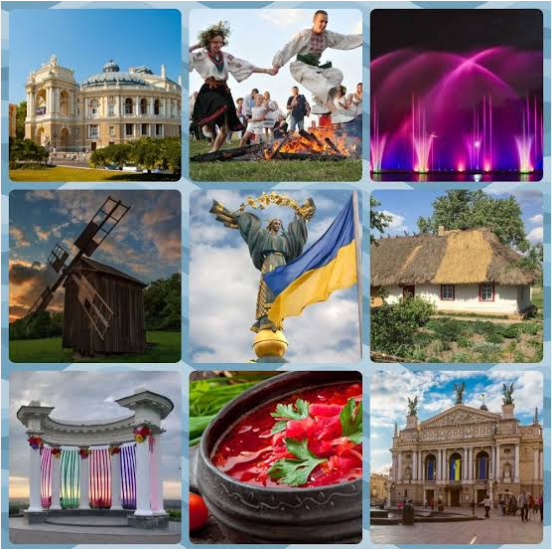
35 Years of Ukraine’s Independence. An Event as a Link
August 24, 2026.
Exactly 35 years ago, an extraordinary session of the Verkhovna Rada of the Ukrainian SSR adopted the Act of Declaration of Independence of Ukraine.
At 18:00 on August 24, 1991, the voting results were as follows:
346 — in favor.
1 — against.
3 — abstained.
12 — did not vote.
[Original document, in Ukrainian; Verkhovna Rada of the Ukrainian SSR, August 24, 1991]
«“For” — 346. Adopted».
The Verkhovna Rada resolved:
[Original document, in Ukrainian; Verkhovna Rada of the Ukrainian SSR, No. 1427-XII, August 24, 1991]
«To proclaim Ukraine an independent democratic state on August 24, 1991».
The Act proclaimed the independence of Ukraine, the indivisibility and inviolability of its territory, and the exclusive force within it of the Constitution and laws of Ukraine.
Thirty-five years is enough time for an event to become an ordinary date on the calendar.
But is it enough to understand the event itself?
...
An Event as a Link
A historical event rarely exists in isolation.
Before it come other decisions, wars, reforms, revolutions, treaties, prohibitions, permissions, agreements, and mistakes. After it come consequences.
Therefore, what follows does not attempt to present the reader with a ready-made conclusion.
There is a chronology.
Documented events are presented together with dates, numbers, and sources. Where appropriate, separately established psychological or social patterns have been inserted between them.
Quotations from historical documents are presented in the original language, with the language and a translation into Ukrainian indicated.
Where there are insufficient documents to establish a causal link, this is explicitly marked with the word:
Conspiracy theory
That is: a hypothesis exists, but is not declared a fact in this material.
293. Four Emperors — One Empire
At the end of the third century, the Roman Empire demonstrated a structure important for understanding the subsequent chronology.
In 293, the tetrarchy took shape: two senior emperors — the Augusti Diocletian and Maximian — and two junior co-rulers, the Caesars Constantius and Galerius.
Historian Byron Waldron, researching Diocletian’s political system, describes the situation as the rule of four emperors, who governed different parts of a single imperial system.
Thus, a plurality of rulers and centers of government does not in itself mean a plurality of state systems.
Conspiracy theory
The tetrarchy proves only the possibility of the structure:
several centers of power → one system.
It does not prove that the much later Rome, Constantinople, the Ottoman Empire, Moscow, the Holy Roman Empire, or other centers were parts of a single hidden administration.
Such a conclusion requires separate links.
But the opposite conclusion — that the visible competition between centers automatically proves their systemic independence — also does not follow from the fact of competition.
The Fourth Century. Roma Nova
The political center of the Roman Empire moved eastward.
Constantinople became New Rome — Nova Roma.
And here what matters is not the modern label “Byzantine Empire,” but the self-designation of its population.
Historian Anthony Kaldellis, 2008, shows that the people whom later historiography called “Byzantines” called themselves Ῥωμαῖοι — Rhōmaioi, Romans, their state — Romania / Romaïs, Constantinople — New Rome, and their rulers — emperors of the Romans.
Researcher Panagiotis Theodoropoulos, February 2, 2021, also shows that “Roman” was the primary self-identification of the population of the Eastern Roman Empire, while Constantinople was the symbolic center of Eastern Roman identity.
The capital changed.
The language of the state changed over time.
The religious environment changed.
Roman political identity did not disappear when the capital moved.
962. Another Rome
February 2, 962 Pope John XII crowned Otto I emperor.
In the West, a political structure later known as the Holy Roman Empire took shape.
Thus, Roman imperial legitimacy could already exist in parallel in several centers, each with its own historical rationale for succession.
Pontifex Maximus
Alongside the imperial one, another Roman vertical existed.
The classical dictionary Charlton T. Lewis and Charles Short, 1879 defines pontifex as Roman high-priest, and Pontifex Maximus as the head or first among the pontiffs.
The precise original etymology of the word pontifex remains disputed.
Therefore, the functional English translation Pontifex Maximus — “high priest” corresponds to the historical substance of the office.
1453. Rome after the Fall of Constantinople
May 29, 1453, the Ottomans captured Constantinople.
But even after this, Roman imperial symbolism did not disappear.
Mehmed II used the title:
Kayser-i Rûm — Caesar of Rome/the Romans.
The Ottoman historian Halil İnalcık specifically studied this Roman component of Mehmed II’s titulature.
A Muslim ruler conquers the capital of the Eastern Roman Empire — and incorporates the Roman Caesar’s title into his own imperial legitimacy.
16th century. Moscow — the “Third Rome”
After the fall of Constantinople, another concept of succession took shape in Moscow’s ecclesiastical milieu — Moscow as the Third Rome.
The monk Philotheus’s original formula had primarily a religious meaning: after the fall of the previous Orthodox imperial centers, Moscow emerged as the last stronghold of the true faith.
Over time, this construct acquired a much broader imperial-political use.
Thus, after 1453, we have not the disappearance of the Roman idea, but several different ways of continuing it.
1545–1563. Trent: a response through organization
The Reformation confronted the Vatican with the threat of losing its religious monopoly across a significant part of Europe.
The Council of Trent lasted from 1545 to 1563.
July 15, 1563, the 23rd session, Canon XVIII, established a system of diocesan seminaries for the systematic training of future clergy.
Four hundred years later, on November 4, 1963, Paul VI specifically commemorated the anniversary of this decision.
Crisis.
Staff training.
Educational standards.
Reproduction of doctrine.
Institutional quality control of those who would pass the doctrine on to the next generation.
1762–1763. Dynasty and school
Peter III was born as Karl Peter Ulrich of Schleswig-Holstein-Gottorp.
Catherine II was born as Sophie Auguste Friederike of Anhalt-Zerbst.
After Peter III, the male dynastic line of the Muscovite imperial house belonged to the Holstein-Gottorp branch of the House of Oldenburg, although politically it continued to use the name Romanov.
The dynasty's official name and its actual trans-European lineage are not one and the same.
The following year, 12 August 1763, Prussian King Frederick II issued the General-Land-Schul-Reglement.
The document required systematic education for boys and girls from approximately five to 13–14 years of age, and specified textbooks, requirements for teachers, attendance monitoring, the roles of clergy and inspectors, and sanctions for parents who did not send their children to school.
The document was drawn up by Johann Julius Hecker and issued in the name of Frederick II.
This does not mean that the entire modern school system is “Prussian.”
It means something more specific:
the eighteenth-century state acquired a refined mechanism for the mass, compulsory, standardized formation of the next generation.
1847. Semmelweis
In May 1847, the physician Ignaz Semmelweis introduced mandatory handwashing with a solution of chlorinated lime before examining women in labor at Vienna General Hospital.
In the first clinic in 1846:
4,010 deliveries.
459 deaths.
11.4% mortality.
In 1848, after the introduction of chlorinated washing:
3,556 deliveries.
45 deaths.
1.3%.
These historical data are cited by the WHO.
The evidence was measurable.
Accepting the new explanation was considerably more difficult.
Psychology: the Semmelweis reflex
Vipin K. Gupta, Chhavi Saini, Meher Oberoi, Gagan Kalra, and Md Imran Nasir, in an article published on 16 December 2019, call the Semmelweis reflex a behavioral tendency to cling to prior beliefs and reject new ideas that contradict them, even when sufficient evidence exists.
This does not mean that every opponent of a new theory is a fool.
It means that the contradiction between a fact and an already formed worldview creates a separate psychological obstacle to accepting the fact.
9 November 1848
In Vienna, Frankfurt Parliament deputy Robert Blum was shot despite his parliamentary immunity.
1 killed.
On 9 November, it was not yet Germany's “fateful day.”
But the date had already appeared.
1917. Vladimir Ulyanov and the German Empire
During the First World War, the German Empire was at war with the Russian Empire.
In April 1917, the German authorities deliberately allowed Vladimir Ulyanov—Lenin—and his group to travel through Muscovite territory to Russia.
Historian Benno Ennker, 8 October 2014, notes that the German imperial government calculated that the revolutionary movement would weaken Russia's ability to continue the war. Financial support for revolutionary activity from the German side is also documented.
This does not prove that Lenin was an operationally controlled German agent in every decision he made.
But it establishes something else:
during wartime, a state deliberately helped an internal revolutionary actor in an enemy state, expecting to gain a strategic result from it.
Conspiracy theory
A stronger hypothesis is possible:
the revolutionary movement was not merely used by Germany but was also directed by it in a controlled manner.
To move from the first assertion to the second, operational management documents are needed, not merely a coincidence of interests and financing.
July 16–17, 1918. The Family of Nicholas II
On the night of July 16–17, 1918, the following were killed in Yekaterinburg:
Nicholas II;
Alexandra;
their five children;
four members of the household.
11 killed.
And then the documentary part begins.
On July 17, around noon, Moscow received a message from the Ural Council about Nicholas's execution.
The report about the family said something else:
[Original document, in English; Ural Regional Council, July 17, 1918]
“His family has been evacuated to a safe place.”
But that same day, Moscow also received a coded telegram from Alexander Beloborodov, chairman of the Ural Regional Council, to Nikolai Gorbunov, secretary of the Council of People's Commissars:
[Original document, in English; July 17, 1918]
“Tell Sverdlov that the entire family suffered the same fate as the head.”
The message also set out the official version:
the family “would die during the evacuation.”
Both documents are kept in Muscovite state archives.
Thus, that same day, Moscow first received the version about the evacuation and then a secret message about the death of the entire family.
After the execution had taken place, the central VTsIK recognized the Ural Council's decision as correct.
At the same time, researchers Andrei Pliguzov and Abby Smith, Library of Congress, February 5, 1996, stated that no written document establishing whether the order to kill the entire family had been given by Sverdlov, Lenin, or another central leader had been found.
Decades later, genetics answered a different question.
Peter Gill and co-authors, 1994, and after the second burial Michael D. Coble and co-authors, March 11, 2009, established, using mtDNA, autosomal STR, and Y-STR, that the remains found belonged to the family of Nicholas II; the second burial contained the remains of the two missing children.
Thus, three things were established simultaneously:
the family was killed;
the official and secret messages on July 17 about its fate differed;
no written central order to kill the entire family has been established.
September 1918. Petrograd
The Red Terror begins.
According to the Presidential Library of Muscovy, in just one of the major episodes of terror in Petrograd in September 1918, the following were shot:
512 people —
former officials, ministers, professors, and other representatives of the old elite.
Not a statistical percentage.
512 people.
November 9, 1918
The German imperial structure collapses.
A republic is proclaimed in Berlin.
Kaiser Wilhelm II loses power.
November 9 appears again in the chronology.
December 30, 1922. The Construction of the USSR
The Rossian SFSR, Ukrainian SSR, Belarusian SSR, and Transcaucasian SFSR form the Union of Soviet Socialist Republics.
That is, the USSR had not only revolutionary origins.
It was a legally constructed union state.
We will need this fact in 1991.
November 9, 1923
Adolf Hitler and Erich Ludendorff attempt a coup in Munich.
This time, the coincidence of the date with November 9, 1918, was not merely a calendar coincidence.
German historical materials explicitly point to the symbolic significance of November 9, 1918, for the putschists of 1923.
February 11, 1929. Mussolini and the Vatican
After the abolition of the Papal States in 1870, the so-called “Roman question” remained unresolved for nearly six decades.
On February 11, 1929, the Vatican’s secretary of state, Cardinal Pietro Gasparri, and the head of Italy’s fascist government, Benito Mussolini, signed the Lateran Accords.
The treaty recognized the international sovereignty of the Vatican and created the territorial State of Vatican City.
[Original document, in Italian; Lateran Treaty, 11.02.1929]
“L’Italia riconosce la sovranità della Santa Sede nel campo internazionale.”
[Translation into English]
[“Italy recognizes the sovereignty of the Holy See in the international sphere.”]
Article 3 transferred full ownership and exclusive sovereign jurisdiction over the new state to the Vatican.
The financial convention provided for:
750,000,000 Italian lire in cash.
And:
1,000,000,000 lire in nominal-value 5-percent government bonds.
The ratifications were exchanged on June 7, 1929.
So, without any comment:
1922 — Mussolini comes to power.
1929 — Italy’s fascist government concludes an agreement that results in the emergence of the modern sovereign territorial state of Vatican City.
January 30, 1933. “We will control him”
Adolf Hitler did not obtain an absolute parliamentary majority in free elections.
He was appointed chancellor by President Paul von Hindenburg after political negotiations involving Franz von Papen and conservative elites.
One of their main mistakes was the assumption that Hitler, as head of a coalition government, would remain controllable.
The principle
A system player introduces a radical instrument into the center of power, assuming that they will be able to control the instrument.
The consequence is known.
December 1, 1934. Kirov
Sergei Kirov was killed at Smolny in Leningrad.
1 killed.
Researcher Wendy Z. Goldman, March 16, 2022, shows that emergency procedures in “terrorism” cases were introduced very soon after the killing, and that the repressive mechanism began expanding far beyond the immediate investigation of the murder.
The event.
The emergency mechanism.
Expansion of the category of the enemy.
1937–1938. Ethnic groups
The official Soviet term was “NKVD national operations”.
Those persecuted included, in particular, ethnic groups.
Historian Andrej Kotliartchouk, Uppsala University, November 18, 2024, summarized contemporary archival research.
July 1937 — November 1938:
335,513 arrested.
247,157 executed.
Polish operation:
139,815 arrested.
111,071 executed.
Ethnic Germans:
56,787 arrested.
41,898 executed.
Latvians:
17,851 arrested.
13,444 executed.
Finns:
more than 12,000 victims;
9,078 killed.
Separate operations were also carried out against Greeks, Bulgarians, Afghans, Romanians, Iranians, and other ethnic groups.
The figures for the Polish, German, Latvian, and other operations are components of the total figure of 247,157 executed.
We will not add them again.
November 9–10, 1938
A mass state-sponsored anti-Jewish pogrom took place in Germany.
At least the following were killed:
91 people.
Approximately:
30,000 Jewish men
were arrested and sent to concentration camps.
November 9 again in the chronology.
1946–1950s. Persecute here — promote there
In 1946, the United States Department of State — hereafter, in the author's terminology for this material, USA (N), United States of America (North) — created the international exhibition Advancing American Art.
For it, the government purchased:
79 oil paintings.
And:
39 watercolors
funded by the American Federation of Arts under contract with the Department of State.
The exhibition was to tour Europe and Latin America for approximately five years.
But within the United States of America (North) itself, modernists began to be attacked as radicals and “un-American” artists.
The program was discontinued.
In 1948, the paintings were sold off as surplus government property.
Another mechanism of cultural policy soon emerged.
CIA official historian Michael Warner called the Congress for Cultural Freedom, established in 1950, one of the CIA's boldest and most successful covert cultural operations.
The initial budget for one of the projects:
$50,000.
Some members of the cultural milieu did not know the ultimate source of funding.
In 1952, the Museum of Modern Art created the International Program.
During 1952–1959:
498 views.
60 exhibitions.
290 cities.
51 countries.
423 American artists.
American modernism and abstract art become part of the international cultural presence of the United States of America.
Thus, two established facts existed simultaneously:
within the United States of America, modernist art could be branded as radical and “un-American”;
abroad, contemporary American art was used as a demonstration of cultural freedom.
Conspiracy theory
The CIA’s covert funding of cultural institutions and international programs has been documented.
The international promotion of American modernism has been documented.
It has not been documented that the CIA directly ordered MoMA to “create Pollock” or determined the artistic value of specific abstract artists.
1949–1952. Leningrad Again
The “Leningrad Affair” became another major wave of repression against Leningrad’s party and administrative circles.
Archival research by David Brandenberger and Nikita Pivovarov, 2023 shows arrests, the fabrication of political connections, the extraction of testimony desired by investigators, and the executions of high-ranking figures.
Thus, in one city we can already see several different waves:
1918 — the Petrograd Red Terror.
1934 and the following years — Kirov and the expansion of repressive mechanisms.
1949–1952 — the Leningrad Affair.
Without asserting a single half-century-long plan.
Only a sequence.
After 1945. South America
After the end of the Second World War, real escape routes for Nazi figures existed — the so-called ratlines.
For example, Adolf Eichmann fled to Argentina. The US Holocaust Memorial Museum notes that individual Catholic Church figures helped him escape.
Conspiracy theory
The documented postwar escape networks to South America, by themselves, do not prove the chain:
Nazi networks → modern drug cartels → an organized future international army.
This is a separate hypothesis requiring evidence of organizational continuity: people, finances, structures, orders, and personnel transitions.
1979–1989. Afghanistan
The Soviet-Afghan War created a large stratum of people with real skills in the use of organized violence.
Researcher Emily Elisabeth Hoge, July 21, 2026, shows that in the post-Soviet period a small part of the Afghan veteran movement formed criminal and semi-criminal structures.
Veterans’ organizations gained business, tax, and customs opportunities.
Some veterans sold their skills as guards and security entrepreneurs.
Some structures directly entered the world of organized crime.
The seeds of the 1990s were prepared by people whom the war had taught violence long before the collapse of the USSR.
This does not prove that the war in Afghanistan began with the aim of creating a future criminal manpower reserve.
But the next result is documented.
We will return to it shortly.
1983. GDR: freedom becomes visible
In the GDR, the number of people allowed to leave for the West permanently changes sharply.
1983 — 7,729.
1984 — 34,982.
In other words, an opportunity that seemed almost unattainable to most people suddenly became visible through the example of tens of thousands of others.
May 1983. Gorbachev in Canada
Even before the British visit, Mikhail Gorbachev went to Canada.
There, he spoke extensively with the Soviet ambassador Alexander Yakovlev.
Yakovlev's later accounts describe private conversations about the systemic problems of the USSR and the need for change.
Thus, Gorbachev's reformist ideas did not first emerge in London.
8 September 1983. Chequers
At a closed seminar on the USSR held by Margaret Thatcher, British political scientist Archie Brown drew attention to Gorbachev as one of the promising representatives of a new generation of the Soviet leadership.
The British Foreign Office's official historian Gill Bennett, 2 March 2021, describes, based on FCO archives, Thatcher's subsequent interest in establishing contact with him.
An important clarification:
Britain was not working with Gorbachev alone.
But Gorbachev was identified before he became general secretary.
1984. British contact
The British side prepared Gorbachev's visit and separately analyzed him as a possible future Soviet leader.
16 December 1984 Gorbachev met with Margaret Thatcher at Chequers.
The conversation lasted approximately:
five hours.
Thatcher then passed Ronald Reagan her assessment of Gorbachev.
[Original document, in English; Margaret Thatcher, December 1984]
«I spent about five hours with Gorbachev last Sunday».
She described him as intelligent, confident, capable of listening and engaging in genuine discussion, and wrote that he was someone she could do business with. At the same time, she considered him loyal to the Soviet system.
The discussions addressed:
the centralized economy;
competition;
state control;
economic reform;
Western technologies;
international security.
At this time, Oleg Gordievsky was simultaneously a KGB officer and an MI6 agent. According to later reconstructions by former GCHQ director David Omand, 2020, and intelligence historian Ben Macintyre, 2018, Gordievsky's information was used by the British in preparing the contacts, and he himself was involved in the Soviet intelligence support for the visit.
The full MI6 operational file has not been released.
Therefore, this is a secondary, albeit serious, reconstruction.
Conspiracy theory
Documented:
early identification of a promising Soviet leader → targeted contact → hours-long assessment → positive evaluation → transmission of that evaluation to the President of the United States of America (North).
Not documented:
Thatcher or MI6 gave Gorbachev a ready-made order or plan to abolish the USSR.
The question of the degree of external influence remains a question.
May 1985. The anti-alcohol campaign
The new Soviet leadership sharply restricts the production, sale, and availability of alcohol.
Penalties are increased.
The number of stores is reduced.
The fight against moonshining is intensified.
Alcohol becomes less accessible.
The campaign had a real positive effect: alcohol consumption, public drunkenness, and mortality declined.
But at the same time, another set of consequences emerged.
A declassified CIA analytical document, prepared as of March 3, 1986, had already recorded a sharp decline in official sales, queues, illegal production, and public resistance.
The same document recalled the political function of alcohol, which the Soviet authorities had traditionally taken into account:
[Original document, in English; CIA, 1986]
«diverts popular frustrations into apolitical channels».
In other words, even an outside analyst was already viewing alcohol in 1986 not only as a medical or economic problem, but also as a channel for diverting social frustration.
When this channel was abruptly blocked, the following emerged:
queues;
the black market;
moonshining;
everyday violations of state prohibitions;
irritation;
economic losses for the state.
Psychology: reactance
Psychologist Jack W. Brehm formulated the theory of psychological reactance back in 1966.
When a person perceives a certain freedom as their own and that freedom is restricted, a motivational state directed toward restoring it may arise.
Fifty-nine years later, Zixi Li and Jingyuan Shi, on June 30, 2025, conducted a meta-analysis:
28 articles.
33 studies.
146 effect sizes.
Language that more strongly restricted autonomy statistically increased:
anger;
negative thoughts;
psychological reactance.
Moreover, for behavior that must be repeated many times, the effect of freedom-threatening language was stronger.
The popular formulation is much older than psychological science:
«forbidden fruit is sweet».
The scientific formulation is more cautious:
a prohibition does not necessarily stop a behavior; under certain conditions, it creates additional motivation to resist the prohibition.
1986. Glasnost
At the same time as the administrative conflict surrounding the anti-alcohol campaign, glasnost began to expand.
Topics that had previously been dangerous or impossible to discuss publicly gradually entered the permitted information space.
Thus, one part of the population was already gaining everyday experience of conflict with an administrative prohibition.
And at the same time, the channel through which dissatisfaction with the system could be expressed publicly was expanding.
November 24–25, 1987. The Stasi
In East Berlin, the Stasi conducted Aktion Falle against the opposition Umweltbibliothek—the Environmental Library at Zion Church.
Arrested:
7 people.
Among them:
A 14-year-old teenager.
But the operational information was wrong: the publication for which the Stasi came was not being printed at the very moment of the raid.
The result:
protests;
church solidarity;
international attention;
the release of those detained;
a sharp increase in the visibility of the Umweltbibliothek itself.
Researcher Silke Kettelhake, November 26, 2018, characterizes the result as a serious defeat for the Stasi’s claim to omnipotence.
The operation carried out to suppress the opposition milieu produced the opposite result: it expanded its support, accelerated its politicization, and weakened the prestige of the repressive apparatus itself.
Psychology: repression → mobilization
Repression has no single guaranteed effect.
It can frighten and demobilize.
But under other conditions it can:
create a sense of injustice;
reveal a common adversary;
create solidarity;
turn a nonpolitical group into a political one.
Karl-Dieter Opp, 1994, studied this mechanism specifically using the material of the GDR’s revolutionary mobilization in 1989.
Conspiracy theory
Could Aktion Falle have been an operation deliberately conducted to discredit the Stasi itself?
The available archives do not prove this.
The documents available are more consistent with the following version:
false operational information → repressive action → unexpected backlash.
To move to the deliberate self-discrediting version, a document showing such an intention would be required.
1988. Political reform in the USSR
Gorbachev’s course is already moving beyond economic improvement.
The 19th Party Conference launches a sweeping reform of the relationship between the party and state bodies.
A new Congress of People’s Deputies is being formed.
A mechanism for competitive elections is being prepared.
In other words, the old system of power still exists.
Alongside it, a new source of political legitimacy is already being built.
November 1988. The GDR bans Sputnik
The Soviet magazine Sputnik began, in the spirit of glasnost, to address topics that the GDR authorities did not want to bring into the open.
After publishing an article about the Hitler–Stalin Pact, the magazine was effectively banned.
The German Federal Archives notes that the reaction was much stronger than the leadership had expected.
At Erfurt’s main post office, more than the following had arrived by the end of November:
700 appeals
from subscribers protesting the termination of the magazine’s distribution.
Public inscriptions appeared:
“Sputnik lebt” — “Sputnik lives.”
Even SED members protested; some left the party. The Federal Archives explicitly notes the decline in the party’s authority as a result of this ban.
Information banned.
Information became more politically significant.
January 1989. The GDR and the right to travel
The new procedure for foreign travel was intended to regulate access to leaving the country.
In practice, it became even harder for some citizens merely to submit an application.
According to secret information from GDR Interior Minister Friedrich Dickel dated February 10, 1989, in January alone:
95,145 applications were approved.
In:
67,323 cases
the applications were not even accepted.
The formal reason:
[Original document, in German; GDR Ministry of the Interior, 10.02.1989]
«due to the absence of the necessary prerequisites».
Psychology: relative deprivation
Séamus A. Power, Thomas Madsen, and Thomas A. Morton, June 20, 2020, summarize research on relative deprivation — relative deprivation.
A person responds not only to the absolute level of their situation.
The comparison matters:
others are allowed to — I am not;
it was allowed yesterday — not today;
the right exists — but access to it is distributed unequally.
The GDR enabled millions of people to see that travel to the West was possible.
Then some people began to be demonstratively denied even the acceptance of their applications.
March 26, 1989. The USSR votes
Elections for People's Deputies of the USSR begin, with genuine alternatives in some constituencies.
For the first time, a large number of voters have the opportunity to do more than simply approve a single proposed candidate.
Later, at the March 28 Politburo meeting, Gorbachev himself called the elections exceptional in Soviet history and acknowledged the scale of the problems for the party's authority.
The old political system is already weakening.
The new one has not yet taken hold.
Psychology: private opinion and public compliance
Economist Timur Kuran, October 1991, analyzing the revolutions in Eastern Europe in 1989, described the mechanism of preference falsification — the falsification of preferences.
A person may privately oppose the regime but publicly demonstrate loyalty because they fear the consequences.
Others see only the public loyalty.
Thus, everyone may mistakenly believe that:
«I am dissatisfied, but everyone else supports the system».
When enough people openly show their disagreement and others see that there are many dissenters, a change in public behavior can become a cascade.
That is why political systems sometimes appear completely stable literally until the moment of their rapid collapse.
Autumn 1989. The GDR
The exodus of citizens through Hungary and other countries intensifies.
The protests become mass demonstrations.
On November 4, 1989 approximately: gather at Alexanderplatz in Berlin:
500,000 demonstrators.
Two days later, a mass demonstration takes place in Leipzig.
On November 7, the GDR government resigns.
On November 8, the Politburo.
November 9, 1989
The new rule on leaving the GDR was actually planned to be introduced on November 10, so that the border authorities would have time to receive instructions.
But at 18:53 on November 9, Günter Schabowski announces the new rules at an international press conference.
A journalist asks when they take effect.
[Original, in German; Günter Schabowski, 09.11.1989]
«Sofort, unverzüglich».
[Translation into English]
«Immediately, without delay».
The news spreads within minutes.
Thousands of people head to the border crossings.
The border guards do not have the relevant new instructions.
The crowd on Bornholmer Straße grows.
The deputy head of passport control reports:
[Bornholmer Straße, 09.11.1989]
«I am stopping the checks and letting the people out.»
By 00:15 on 10 November, approximately the following number of people had passed through this one crossing:
20,000 people.
The political center had already received the new reality.
Two distant events
17 July 1918.
The irreversible action had already been carried out on the ground.
The center received the report after it had been carried out.
It then worked with the accomplished fact.
9 November 1989.
The announcement preceded the prescribed procedure.
The officials on the ground did not have the necessary instructions.
An irreversible fact was created on the ground.
The center was already working with a new reality.
This is a structural analogy of procedures.
It is not evidence of a causal link between Yekaterinburg in 1918 and Berlin in 1989.
14–15 March 1990. The CPSU and the presidency
On 14 March 1990, Article 6 of the USSR Constitution was amended.
The CPSU lost its constitutionally enshrined political monopoly.
On 15 March, Mikhail Gorbachev became President of the USSR.
Therefore:
glasnost weakened the information monopoly;
competitive elections—the personnel and electoral monopolies;
the amendment of Article 6—the legal monopoly;
the presidency created a center of supreme state power, separate from the traditional party hierarchy.
Gorbachev nevertheless remained General Secretary of the CPSU.
The old mechanism continued to exist.
The new one was already being built.
Conspiracy theories
A possible interpretation:
the old system’s control remained in place while a new mechanism of power was being created, so that the old system could not stop the new one.
The functional sequence is documented.
The claim of an external sponsor of such a process is not.
1991. A Union that had a law on secession
As early as 3 April 1990, the USSR adopted a special law on the procedure for a Union republic to secede.
It provided for a complicated procedure, a referendum, and transitional mechanisms.
That is, as of 1991, a legal procedure for changing the composition of the Union, defined by the USSR itself, existed.
24 August 1991. Ukraine
We have returned to the beginning.
346 votes in favor.
Ukraine declares independence.
But the parliamentary declaration was not yet the final link.
1 December 1991. The people
Those who came to the referendum:
31,891,742 voters.
Turnout:
84.18%.
Independence was supported by:
28,804,071 people.
90.32%.
This fact is fundamental.
Any version involving the managed dismantling of the USSR, an elite agreement, or an external special operation, if it claims to be serious, must also explain this result.
Almost 29 million votes by Ukrainians cannot be turned into a nonexistent quantity.
8–26 December 1991. Dismantling
On 8 December, the leaders of Muscovy, Ukraine, and Belarus signed the Belovezh Accords.
9 December Gorbachev publicly denies the right of the three leaders to decide the fate of the entire Union on their own and speaks of the need for a legal procedure.
25 December Gorbachev leaves the post of President of the USSR.
26 December The Council of Republics of the Supreme Soviet of the USSR acknowledges the termination of the Union's existence.
Thus:
1922 — the legal construction of the Union.
1991 — its political and legal dismantling.
And the mechanism of its actual dismantling was not a simple mirror-image implementation of the procedure provided for by the law of 3 April 1990.
Conspiracy theories
Calling the liquidation of the USSR a political special operation can be presented as a hypothesis.
To turn this hypothesis into an established fact, documents showing a preliminary plan and coordination among those carrying it out would be needed.
At the same time, no such version can ignore a separate fact:
90.32% of participants in the Ukrainian referendum supported independence.
The world recognizes Ukraine
After the referendum, recognition of Ukraine accelerates sharply.
The United States of America (North) officially recognized Ukraine on 25 December 1991 — the last day of Gorbachev's presidency over an already almost nonexistent USSR.
China — 27 December 1991.
France — 27 December.
According to the official Ukrainian diplomatic chronology, the Vatican recognized Ukraine in January 1992; diplomatic relations were established on 8 February 1992.
Earlier, our materials cited “30 January 1992.” We have not established a primary document for precisely this date, so it is not included here.
5 December 1994. Budapest
Ukraine, Vlasov's Soviet Muscovy, the United States of America (North), and the United Kingdom sign the Budapest Memorandum.
[Original document, in English; 05.12.1994]
«respect the Independence and Sovereignty and the existing borders of Ukraine».
The document also contains commitments to refrain from the threat or use of force and from economic coercion, and provides for consultations.
Important precision: the provision on immediately seeking assistance from the UN Security Council is formulated specifically with regard to aggression or the threat of aggression involving the use of nuclear weapons.
Therefore, the memorandum cannot be described as an agreement on automatic military intervention by the United States of America or the United Kingdom on Ukraine's side.
But respect for borders and the renunciation of force are stated explicitly in the text.
The 1990s. Pallavicini
The Italian economist Giancarlo Pallavicini was one of the first Western advisers to the Soviet and then post-Soviet leadership on economic reforms.
The Italian encyclopedia Treccani records his work with the Soviet reformist milieu, including Leonid Abalkin, and later under Yeltsin.
Pallavicini's public position was paradoxical in light of what happened later:
he warned against overly rapid privatization, predicting the transfer of ownership to a narrow circle of the establishment and the destruction of the economic system.
Conspiracy theory
At least three versions are possible:
he really tried to stop it;
he understood the consequence but did not control the process;
public criticism created an alibi, while privately he facilitated the opposite.
So far, only the public position has been documented.
Likewise, an old patrician family, Pallavicini/Pallavicino, has historically existed, but we have not yet established a genealogical connection between this particular economist and the corresponding patrician line.
November 11, 1996. Afghan cadres in the new economy
At Moscow's Kotlyakovskoye Cemetery, a bomb explodes during a memorial service for the head of a veterans' foundation.
14 killed.
50 wounded.
24 seriously.
Researcher Emily Elisabeth Hoge, July 21, 2026, characterizes the attack as the culmination of a conflict within the organization of Afghan veterans, some of whose members entered organized crime and the coercive enterprise of the post-Soviet economy.
1979–1989:
training in organized violence during the war.
The 1990s:
some trained people sell their capacity for violence within the new economic order.
1997. GUAM
Georgia, Ukraine, Azerbaijan, and Moldova form a political format that would later become GUAM.
All four states faced territorial conflicts.
In its own official documents, GUAM directly links the unresolved conflicts in the territories of Azerbaijan, Georgia, Moldova, and Ukraine to threats to their sovereignty and territorial integrity.
The mechanisms differ.
In Transnistria, prolonged Muscovite military-political influence has been documented.
In Georgia, there is Muscovite military occupation of Abkhazia and South Ossetia.
In Ukraine, the occupation of Crimea and part of Donbas, and since 2022, a full-scale war.
The Karabakh case is historically different, so it cannot honestly be described by the formula “Moscow occupied Azerbaijan.”
One geopolitical belt.
Four territorial conflicts.
Not identical implementation mechanisms.
2003. Iraq and Iran
After the US-led coalition invasion, Saddam Hussein’s regime was abolished, and the old army and a significant part of the state apparatus were dismantled.
Iraq was sharply weakened as Iran’s historic regional adversary.
Researcher Louise Fawcett, Oxford University, March 6, 2023, describes 2003 as an important turning point in the expansion of Iran’s regional capabilities.
Thus:
The United States of America eliminated one of Iran’s main adversaries — a fact.
Iran gained a strategic benefit from the outcome — a fact.
That the goal of the United States of America was specifically to strengthen Iran does not automatically follow from these two facts.
This is a useful control example for our entire material.
The outcome is not automatic proof of intent.
But if the same foreseeable outcome is reproduced many times after its mechanism has already become known, the question of intent becomes increasingly natural.
April 3, 2008. “You will be members”
The Bucharest NATO Summit.
Regarding Ukraine and Georgia, the allies record:
[Original document, in English; NATO, 03.04.2008]
«We agreed today that these countries will become members of NATO».
But they are not granted a Membership Action Plan — a Plan of Action for Membership — at that time.
The promised outcome.
The mechanism for achieving it was deferred.
2009. RESET
March 6, 2009, Geneva.
Hillary Clinton and Sergey Lavrov press a symbolic reset button.
The inscription in Rossian also turns out to have been translated poorly: instead of the precise “reset,” a word closer to “overload” was used.
The symbols of the official ceremony were the national flags of the United States of America and the Rossian Federation, along with the same red-and-yellow button.
July 6, 2009 Barack Obama and Dmitry Medvedev create a bilateral presidential commission — the “reset” takes institutional form.
November 9, 2009
Berlin.
Exactly 20 years after the opening of the Wall.
Among others, those present at the celebrations are:
Angela Merkel;
Dmitry Medvedev;
Hillary Clinton;
Gordon Brown;
Nicolas Sarkozy;
Mikhail Gorbachev;
Lech Wałęsa.
Along the former Wall, they install thousands of large symbolic dominoes.
They fall one after another.
March 2009:
RESET.
July:
institutional formalization RESET.
9 November:
heads of states or governments observe a symbolic domino fall along the former border.
Conspiracy theories
A symbolic reading of double-headed eagles, dynastic signs, dates, or dominoes may be part of the author’s interpretation.
In itself, it does not prove:
Dmitry Medvedev’s hidden genealogy;
a secret dynastic transfer of power;
or a single operational center for the events of 2009.
That would require a separate documentary line of evidence.
10 April 2010. Smolensk
The Polish presidential aircraft crashed near Smolensk.
Those killed:
96 people.
Among them:
Polish President Lech Kaczyński;
Maria Kaczyńska;
senior commanders;
parliamentarians;
state officials;
representatives of civic organizations.
Prime Minister Donald Tusk and the Polish government were not on board.
As of 2025–2026, the Polish criminal investigation had not been finally completed; Polish authorities continued proceedings concerning Muscovite air traffic controllers and examined various versions, including sabotage.
Therefore, the documented fact is:
96 deaths.
Not a fact documented by a final court ruling:
the deliberate killing of 96 people.
For this reason, these 96 will not be included in our lower total of those killed.
4 March 2014. “We are not considering it”
After Muscovite troops appeared in Crimea, the double of the double of Putin, who died in 2004 publicly denied plans to annex the peninsula.
Two weeks later, 18 March, a treaty on its “annexation” was signed in Moscow.
This is one example of a separate future section:
Said → done.
One example by itself proves nothing about a general rule.
To test the principle:
“if the regime categorically says ‘it will not happen,’ check whether that is exactly what is being prepared”
it is necessary to collect all, not just the successful, categorical predictions, and compare them with subsequent actions.
12 February 2015. Minsk
The Package of Measures for the Implementation of the Minsk Agreements provides for a ceasefire, the withdrawal of weapons, and other steps.
But in 2016, the OSCE Special Monitoring Mission conducted:
26,956 patrols.
It recorded:
320,130 ceasefire violations.
It observed:
3,099 cases
of weapons being positioned in violation of the agreed withdrawal lines.
And it encountered:
1,950 restrictions on freedom of movement.
The ceasefire existed in the document.
The war was not eliminated.
2019–2020. Aid that had already been approved
The United States of America appropriated security assistance for Ukraine.
In the summer of 2019, the United States of America administration withheld part of the funds.
On January 16, 2020, the Government Accountability Office — the United States of America’s audit office — concluded that withholding approximately:
$214,000,000
of the aid appropriated for Ukraine’s Ministry of Defense for political reasons violated the Impoundment Control Act.
That is, here the word “delay” is not an assessment.
The money had been approved.
Its use was delayed.
February 24, 2022
Vlasov’s Soviet Muscovy begins a full-scale invasion.
The Minsk line of contact did not become a permanent peaceful border.
It became the initial configuration for the next phase of the war.
Only a narrow but already empirically confirmed conclusion follows from this:
A ceasefire along the line of contact without eliminating the possibility of a renewed attack is not identical to ending the war.
September 2022. “Not under discussion” → mobilization
On September 13, 2022, the Kremlin reported that general mobilization was not under discussion.
September 21, the double of Putin, who died in 2004, announced “partial mobilization.”
Officially, the number mobilized was:
300,000 people.
The Kremlin itself later acknowledged problems with conducting the mobilization.
Another example:
a statement → an opposing state action after a short interval.
Not a law of nature.
A fact for a future complete corpus of statements.
February 24, 2023. China: a peace formula
The PRC publishes its position on the war.
It simultaneously contains:
a call to respect sovereignty and territorial integrity;
a call to cease hostilities;
a call for negotiations;
an objection to unilateral sanctions.
Later, NATO would call the PRC decisive enabler — the decisive facilitator of the Muscovite war because of its support for Muscovy’s defense-industrial base.
In 2026, the EU would already be applying sanctions against China-based entities connected with supplies to the Muscovite military-industrial complex.
Again, two separate rows of facts:
official peaceful rhetoric.
material conduct.
2024. India
India insists on dialogue and diplomacy.
At the same time, India and Vlasov's Soviet Muscovy officially continue to characterize their relations as:
“a special and privileged strategic partnership.”
That is, a call to end the war does not mean an automatic break in the strategic partnership with the state waging that war.
2024. The Vatican and the “white flag”
In March 2024, Francis used the image of the “white flag” and negotiations in a discussion about Ukraine.
After the international reaction, Vatican representatives explained that the reference was to negotiations, not a call for unconditional surrender.
For our chronicle, this is enough:
the rhetoric of negotiations appears when the occupied territories remain under the control of Muscovite territory.
2022–2026. “Not now”
Western aid to Ukraine repeatedly followed a documented sequence.
Tanks.
ATACMS.
F-16s.
The use of some Western weapons against military targets on Muscovite territory.
At first, some decisions were postponed or prohibited because of fears of escalation.
Later, the relevant restrictions were partially or completely lifted.
That is:
weapons that are called too dangerous to transfer today may be transferred tomorrow after a change in the political assessment of risk.
And the time between “no” and “yes” cannot be recovered.
Psychology: repetition
In 1977, psychologists Lynn Hasher, David Goldstein, and Thomas Toppino showed that repeated plausible statements were later rated as more truthful than new ones.
In 2015, Lisa Fazio, Nadia Brashier, B. Keith Payne, and Elizabeth Marsh showed that even existing knowledge does not fully protect against this mechanism.
This is called the illusory truth effect.
Repetition makes the cognitive processing of a statement easier.
The familiar begins to feel more natural.
Under certain conditions, more plausible.
This does not prove that repeatedly repeating a political formula will guarantee that everyone accepts it.
But it explains why a formula that initially seems unthinkable may, after the hundredth repetition, already be perceived simply as one of the “realistic options.”
2026. A halt along the line of contact
Now let us place side by side only the facts already cited.
1994.
Ukraine's territorial integrity and borders were confirmed in writing in the Budapest Memorandum.
2014.
Crimea is occupied.
The war in Donbas begins.
2015.
The Minsk ceasefire mechanism.
2016.
The OSCE records 320,130 violations in a single year.
2022.
Full-scale invasion.
2022–2026.
Certain weapons systems and ways of using them are initially deemed too escalatory, and later permitted.
2026.
Options for stopping the fighting along the actual line of contact are being discussed again.
Therefore, the statement:
“stopping the shooting” is not equivalent to “eliminating the causes and possibility of a subsequent war”
no longer requires prophecy.
The Minsk experience demonstrated this.
And the forecast of what will happen after a new freeze is another category altogether.
We will return to it at the end.
The Maghreb and Europe
The European Union simultaneously:
strengthens the fight against irregular migration;
and develops legal labor mobility programs, in particular through Talent Partnerships with Morocco and Tunisia.
Contemporary studies of European politics show a statistical relationship between the increased visibility of the migration problem and support for some radical-right political forces.
Other major experimental studies show that bringing the refugee issue to the forefront can intensify political polarization.
In other words, it is documented that:
mass migration becomes not only a demographic phenomenon but also a factor in reshaping the political field.
Conspiracy theories
The forecast of a future major political crisis based on migration can be tested.
The claim that current migration policy is already part of a specific pre-planned operation for such a crisis has not been documented or proven to date.
Intersection
After the entire chronology, the names of states can be removed and only the structures left.
Several centers—one formal system
Roman tetrarchy.
Changing the shell while preserving symbolic legitimacy
Roma.
Nova Roma.
Kayser-i Rûm.
Third Rome.
Education as the institutional reproduction of the system
Tridentine seminaries.
Prussian compulsory schooling.
An external actor uses the opponent’s internal political actor
Germany.
Lenin.
An irreversible fact precedes the normal procedure
Yekaterinburg.
Berlin.
Repressive action produces the opposite political result
Umweltbibliothek.
A ban increases the political significance of what is banned
Anti-alcohol campaign.
Sputnik.
The right to leave.
The old system is weakened while a new center of power is created
CPSU.
Congress of People's Deputies.
Presidency.
Public persecution and simultaneous external promotion
American modernism.
1940s–1950s.
“We will be able to control him”
Hitler.
The result is promised—the mechanism is postponed
Bucharest.
«Not now»
Aid to Ukraine.
Temporary suspension without eliminating the possibility of continuation
Minsk.
One thing was said — the opposite was done
Crimea.
Mobilization.
Other cases that have yet to be fully systematized.
Psychological intersection
And now the same events without political labels.
Reactivity
Jack Brehm, 1966.
A threat to freedom can generate motivation to restore that freedom.
Relative deprivation
A person compares themselves not only with an absolute standard, but with other people and their own expectations.
Repression → mobilization
Under certain conditions, punishment for nonpolitical behavior itself politicizes people.
Preference falsification
Timur Kuran, 1991.
A system may appear unanimous while people conceal their private attitudes.
Cascade
When concealment is no longer necessary, public behavior can change much faster than private convictions.
Illusory truth effect
Hasher, Goldstein & Toppino, 1977; Fazio et al., 2015.
What is repeated becomes familiar.
What is familiar may seem more plausible.
Semmelweis reflex
A new fact that contradicts an established worldview may be rejected precisely because it requires that worldview to be reconstructed.
Therefore, this last effect must also be applied to the material itself.
A fact that confirms our worldview must be checked.
A fact that destroys it must be checked even more thoroughly.
Our material
We began with the vote on 24 August 1991.
And then passed through:
Rome;
New Rome;
imperial titles;
the Vatican;
Prussia;
compulsory schooling;
Semmelweis;
9 November;
Lenin;
the murder of the Romanovs;
the Petrograd terror;
the creation of the USSR;
Hitler;
the Lateran Pacts;
ethnic operations by the NKVD;
American cultural policy;
Afghanistan;
the anti-alcohol campaign;
glasnost;
the Stasi;
the ban on Sputnik;
the fall of the Berlin Wall;
Gorbachev's presidency;
the Ukrainian referendum;
the dismantling of the USSR;
Budapest;
GUAM;
Bucharest;
RESET;
Smolensk;
Crimea;
Minsk;
the full-scale war;
delays in providing aid;
the political repetition of already known constructs.
The text deliberately did not add the numbers up into a single sum.
Up to this point.
The number of those mentioned as killed
We count only those episodes up to this point for which the material directly gives a specific number of people intentionally killed, shot, or executed.
We do not count subsets twice.
We do not include the wounded.
We do not include those arrested.
We do not include people who simply died of illness.
We do not include the 96 people killed near Smolensk, since the intentional killing of these people has not been legally established.
We do not include the war in Ukraine—it will be addressed separately.
Robert Blum.
The family of Nicholas II and their retinue.
Petrograd.
Kirov.
The NKVD’s “National Operations.”
The November Pogrom of 1938.
Kotlyakovskoye Cemetery.
At least 247,787 killed.
This is not the number of victims of all the historical processes described.
It is not the number of victims of empires.
It is not the number of victims of communism, fascism, or the wars of the 20th century.
Only the arithmetic sum of those specific people killed whose number happened to be named in this material.
Ukraine. 2014 — August 24, 2026
There is no single “official figure” here.
And if one is created by mechanically combining different databases, it will be misleading.
The UN uses different methodologies for different periods and categories.
April 14, 2014 — December 31, 2021
OHCHR estimated the total number of conflict-related deaths at:
14,200–14,400 people.
Including:
at least 3,404 civilians;
approximately 4,400 Ukrainian servicemembers;
approximately 6,500 members of armed formations.
This is not 14,000 “civilians killed by Ukraine.”
These are all the main categories of those killed on both sides of the conflict according to the OHCHR methodology.
February 24, 2022 — July 31, 2026
As of August 13, 2026, the UN Human Rights Monitoring Mission in Ukraine had verified at least:
16,874 civilians killed.
Among them:
820 children.
Injured:
51,273 civilians.
Among them:
3,126 children.
The UN explicitly warns that the actual number is higher, especially in Muscovite territory, where verification capabilities are limited.
In just the first seven months of 2026:
1,839 civilians were killed.
10,638 were injured.
In July alone:
437 were killed.
2,610 were injured.
Military personnel
On February 4, 2026, Ukrainian President Volodymyr Zelenskyy told France 2 that approximately:
55,000 Ukrainian servicemembers had been killed in combat
since the beginning of the full-scale war, and separately mentioned the large number officially reported missing.
This is an estimate publicly announced by the president, not a completed nominal audit as of August 24.
Therefore, there is no honest mathematical formula for:
“exactly X Ukrainians were killed officially since 2014”
there is none today.
There are separate, clearly dated, methodologically different figures.
It is these that we retain.
August 24, 2026. Hormuz
The forecast below is also recorded not with the benefit of hindsight.
As of August 21, 2026, the International Maritime Organization had already recorded in the crisis area:
68 confirmed maritime incidents.
19 confirmed seafarer deaths.
The IMO supports a special crisis mechanism concerning the Strait of Hormuz.
Thus, the forecast is made at a moment when the crisis is already underway, but before its eventual outcome is known.
Prophecy-predictions
Recorded on August 23, 2026.
Published on August 24, 2026.
This section is fundamentally different from everything that came before.
Above were events that had already occurred.
Below are statements about the future.
Therefore, they must not only be recorded but also be disprovable.
1. Ukraine — 2032
Forecast: the Muscovite-Ukrainian war will continue until 2032.
“Will continue” here does not necessarily mean uninterrupted fighting at the same intensity.
The forecast is considered valid if, by 2032, at least one of the main signs of an unfinished war remains:
Muscovite forces hold occupied Ukrainian territory against Ukraine’s will;
there is no stable, internationally recognized settlement that has genuinely eliminated the possibility of renewed hostilities;
new major phases of fighting occur after a temporary ceasefire.
If, by 2032, a stable settlement is concluded and genuinely implemented, the Muscovite military threat ends, and no new phase of the war occurs, the forecast will be disproved.
2. Hormuz — 2029
Forecast: tensions surrounding the Strait of Hormuz will persist until 2029.
This means the persistence of a substantial military-political risk to normal shipping:
regular combat incidents;
significant restrictions on movement;
direct military coercion;
or a prolonged crisis presence that prevents the strait from returning to its normal prewar regime.
If, well before 2029, shipping steadily returns to normal, the military crisis ends and does not recur, the forecast will be disproved.
3. There will be no return to the past
This is a broader forecast.
The political, economic, and security order that existed before the great wave of crises from 2014 to 2026 will not return in its previous form.
The old names may remain.
The same institutions may remain.
The same flags and offices may remain.
But their actual functions, the balance of power, methods of control, and limits of what is permitted will change.
4. Choice
The most important forecast is at the same time the least amenable to calendar-based verification.
No ruler, manager, teacher, or reformer, however capable, can replace society forever.
If order rests solely on one person, that person’s disappearance destroys the order.
If constructive behavior is reproduced by the population itself, the disappearance of an individual leader does not stop constructive action.
Therefore, the ultimate direction depends not only on presidents, emperors, general secretaries, pontiffs, intelligence services, armies, banks, and international organizations.
It depends on the plebs.
It depends on a person's ability to:
verify claims;
distinguish fact from interpretation;
notice a recurring mechanism;
not accept the familiar as true merely because it has been repeated many times;
not reject a fact merely because it shatters the familiar picture of the world;
maintain constructive order without coercion from above;
and pass this ability on to future generations.
Otherwise, the new Inquisition will not necessarily come in medieval clothing.
It may come with modern technologies, proper terminology, democratic names for institutions, and a convincing explanation of why yet another restriction of freedom is needed only temporarily.
And then become commonplace.
Just as repeated words become commonplace.
Just as repeated wars become commonplace.
Just as “temporary” lines of contact become commonplace.
And then, after all the chronology presented above, only one question remains:
Очінь многа букаф )))
Add new comment