
Ukraine will still have to win more than one war
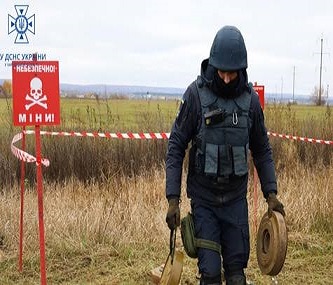
This week, important news came from Kosovo. There, a long-running program to clear areas contaminated after the 1998–1999 war was completed. Almost three decades have passed since the fighting ended, but only now has a significant part of this work been brought to completion.
This news prompts reflection on Ukraine’s future. As of 2026, approximately 133,000 square kilometers of Ukrainian territory potentially require surveying and clearance of mines and explosive remnants of war. This is more than one-fifth of the country’s area, while hostilities are still continuing and continue to produce new contaminated areas every month.
This is not only about minefields. Unexploded ordnance, missile fragments, cluster munitions, and other remnants of war that can remain deadly for decades also pose a danger. Even fifty years from now, Ukraine will likely still be finding ammunition from this war, just as shells from the Second World War continue to be found in various European countries today.
Therefore, the question is not whether Ukraine will clear its territory, but how long it will take. There is no precise answer yet, but it is obvious that this will take more than one, and even more than five, years. Restoring safety across most territories may take ten or twenty years after the active phase of the war ends, while fully clearing the country will most likely require much more time.
At the same time, the area of potentially contaminated territories does not mean that deminers must physically cover every square meter. First, a large-scale survey is needed to determine where a real danger exists and where the land can safely be returned to people without complete clearance. It is precisely at this stage that technology can significantly speed up the work.
Drones, aerial photography, satellite data, artificial intelligence, magnetometers, and other sensors will help identify suspicious areas more quickly. Autonomous ground systems and mechanized demining machines will be able to carry out the most dangerous operations, while a unified digital map will make it possible to coordinate the work of various services and allocate resources more effectively.
For Ukraine, this is not only a humanitarian task but also a large-scale technological challenge for decades to come. We have already been forced to develop unmanned systems for warfare very quickly. After the war ends, we will have to create robotic and autonomous solutions for returning the country to normal life just as quickly.
This represents an important opportunity for Ukraine. We can not only spend decades clearing our own territory, but also develop technologies, standards, and practices that will subsequently be applied in other countries.
After this war ends, we will have to win another, no less important, war to return Ukrainian land to the people.
Viktor Taran, facebook
Add new comment