
European safety requirements for motorcycle helmets are being introduced in Ukraine: what will change from September 27
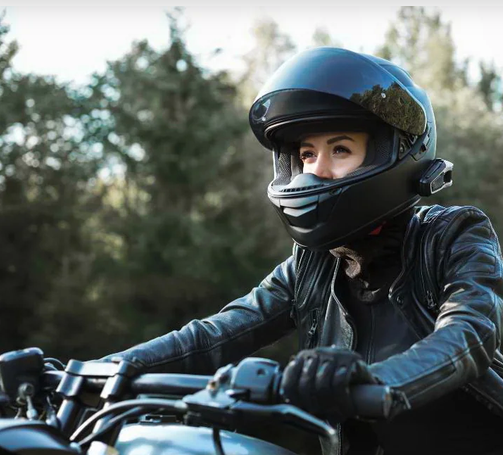
On September 22, a press conference dedicated to the new safety requirements for motorcycle helmets was held at the Ukrainian Crisis Media Center. From September 27, 2026, Resolution No. 389 of the Cabinet of Ministers, which incorporates the requirements of UN Regulation No. 22.06 (ECE 22.06) regarding motorcycle helmet safety into the Technical Regulation, will enter into force in Ukraine. From then on, new motorcycle helmets that meet the established safety requirements may be placed on the market.
The problem remains widespread. In 2025, 438 people were killed in traffic accidents involving motorcycles and mopeds. Over the past five years, the fatality rate in such accidents per million inhabitants has almost doubled — from 7.7 to 14 cases. In the first half of 2026, 147 people were killed and another 2,172 were injured in such accidents.
From the obligation to wear a helmet to safety requirements for helmets
The number of motor vehicles on the roads is increasing rapidly. According to the KIIS survey, in 2025, one in eight Ukrainians used this type of transport. Previously, Ukrainian regulations required motorcycle and moped drivers and passengers to wear helmets, but did not establish any requirements for their protective properties. Formally, the requirement could be met by either a certified helmet or a product without any quality standard that did not provide adequate protection.
Regulation ECE 22.06 is an internationally recognized motorcycle helmet safety standard, one of the most widely used in the world, applied in 45 countries, including most European Union countries. It establishes modern and stringent requirements for the protective properties of helmets and provides for a broad range of tests, including tests that take different types of impacts into account.
According to a 2025 survey, more than 65% of Ukrainian motorcycle and moped drivers and passengers wear helmets. At the same time, only 32% say that they have a certified helmet.
“A safe, high-quality helmet is one of the most effective means of protecting motorcyclists. According to the WHO, its proper use can reduce the risk of death as a result of a traffic accident by more than six times, and reduce the risk of brain injuries by up to 74%. Therefore, the entry into force in Ukraine of the requirements of UN Regulation No. 22.06 — the international safety standard for motorcycle helmets — is an important step that is consistent with WHO recommendations. The next important stage is its effective implementation, namely: the availability of certified helmets, consumer awareness, proper market surveillance, and compliance with the established requirements”, said
Olha Alimenko, technical specialist, WHO Country Office in Ukraine.What will be checked on the market
The State Service of Ukraine for Transport Safety carries out state market surveillance to verify products’ compliance with the established requirements. In particular, inspectors will check documents confirming motorcycle helmets’ compliance with the ECE 22.06 safety regulation and the proper labeling of products. A helmet must bear the marking required under UN Regulation No. 22: the letter “E” in a circle, the number of the country that granted approval, and the approval number. The list of authorized bodies entitled to issue type-approval and conformity certificates for motorcycle helmets is published on the website of the Ministry for Communities and Territories Development of Ukraine.
The adaptation period for the new requirements will last until the end of 2026. From 2027, the State Service of Ukraine for Transport Safety plans to carry out market surveillance of motorcycle helmets’ compliance with the new requirements in full. After motorcycle helmets are included in the sectoral product control plan, customs authorities will also check their compliance with the Technical Regulation when they are imported into Ukraine.
“The most important thing now is to inform business representatives about the new requirements so that they bring their products, documents, and labeling into compliance with the updated Technical Regulation. If noncompliance is identified during market surveillance, the business entity will be given a period of time to remedy it. If the requirements are not met within that period, the measures and sanctions provided for by law will be applied”, emphasized
Dmytro Horodynskyi, Head of the State Market Surveillance Department of the State Service of Ukraine for Transport Safety.At the same time, helmets that were legally placed on the market before September 27, 2026, will not be banned or restricted from sale due to their non-compliance with the new Technical Regulation.
What consumers should do
Motorcycle users should already check whether their helmet meets the established safety requirements and, if necessary, replace it with a certified ECE 22.06 helmet. When choosing a helmet, it is worth checking not only its appearance but also whether it has the required labeling.
It is also important to choose the right size and fasten the helmet securely.
“At Motohelp, we see the consequences of motorcycle crashes firsthand and fully support the introduction of the standard. The nature and severity of head injuries depend not only on the impact itself but also on how effectively the helmet can protect a person at the moment of collision. An analysis of the market and points of sale shows that a higher helmet price does not guarantee protection, which is why we support market surveillance and restrictions on the import of uncertified helmets. It is also extremely important to inform two-wheeled vehicle users about the genuine safety criteria,” said volunteer of the NGO “Motohelp” Oleksandra Hlotova.
The next step is amendments to the Traffic Rules
The primary goal of the new requirements is to reduce the number of deaths and serious injuries among motorcycle users, as well as the related economic losses for the state and families. The benchmark should be the maximum use of certified helmets by all drivers and passengers. To achieve this, helmet safety requirements must also be enshrined in the Traffic Rules and supported by liability for non-compliance. This will align product requirements with the rules governing their use by drivers and passengers.
“The introduction of mandatory certification for motorcycle helmets in Ukraine is an important step toward our shared goal of reducing road deaths, in line with the Vision Zero approach. The Patrol Police Department also conducts measures to prevent violations, and this year they focused, among other things, on the use of passive safety equipment, including motorcycle helmets. At the same time, it is important to strengthen information efforts: the patrol police already deal with the consequences of traffic crashes, whereas timely information about the importance of using certified helmets can help prevent many tragedies”, said a representative of the Patrol Police Department of Ukraine, Police Major Dmytro Andriienko
The experience of Poland shows that when clear requirements and oversight are in place, certified helmets are used by nearly 100% of motorcycle users. In 2023, the mortality rate among motorcyclists there was 5.3 cases per million inhabitants, while among moped riders it was 1 case.
“We want every motorcycle driver and passenger to use a certified helmet that truly protects them. To this end, the next step should be amendments to the Traffic Rules stipulating the use only of motorcycle helmets that meet the established safety requirements. Systematic public information about why it is worth choosing a certified helmet and how to use it correctly is no less important,” said Oksana Levytska, chair of the board of the NGO “Life” and a road safety expert
The event participants emphasized that protecting vulnerable road users requires a comprehensive approach: safe road infrastructure and vehicles, responsible behavior by road users, appropriate assistance after traffic crashes, and effective road safety management. This requires cooperation among government authorities, the healthcare sector, civil society, and the motorcycle community itself.
As a professional motorcycle courier—with two years of working as an individual entrepreneur with Glovo, Bolt, and Raketa in Kyiv—I support this!
Add new comment