
A Chinese company will build a section of the Batumi–Sarpi highway in Georgia
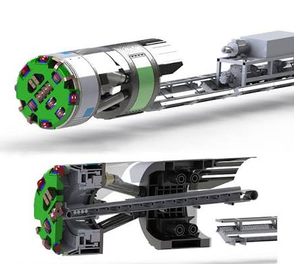
The Chinese company China Railway Tunnel Group will begin construction of an 11.3-km section of the Batumi–Sarpi highway in Georgia.
The contract with the Chinese company, which won the international tender, was signed on Wednesday at Georgia’s Ministry of Infrastructure.
The project envisages the construction of a two-lane road with a total length of 11.3 km, including a 7.6-km tunnel, three bridges and a 500-metre sea embankment.
Total implementation period: 4 years (48 months).
Technical features: the 7.6-km tunnel will be the second-longest in Georgia, while the 500-metre sea embankment is necessary to protect the route from storms coming from the Black Sea.
Such a short timeframe for terrain and hydrogeology of such complexity is possible thanks to modern tunnel-boring machine (TBM) technology. High-speed tunnelling complexes can excavate up to 300–500 metres of rock per month, while bridges can be built and the embankment filled in simultaneously.
The financing of this project follows the classic international model for major infrastructure facilities in developing economies. It is mixed (hybrid) financing, consisting of external debt capital and government funds.
Total contract budget
amounts to 809 009 547.18 lari (equivalent to approximately 311 million USA (N) dollars (N) at the time of signing).
Loan from the Asian Development Bank (ADB)
The Asian Development Bank (ADB) is the key financial donor. The project was approved as part of support for the development of the strategic East–West corridor (the E60–E70 highways). The bank provides a sovereign long-term loan at a low interest rate, which is usually subsidised for sustainable logistics and regional integration projects.
Georgia covers the remaining part of the project cost directly from its own budget. Government funds are used not only for construction work but also for related processes, such as purchasing land from private owners along the route and providing administrative support.
Why was this particular model chosen?
- Scale and risks: For the budget of a single country (especially at the regional level in Adjara), allocating $311 million at once for 11 km of road would be a huge burden. The ADB loan spreads the financial pressure over decades.
- Strict international audit: The participation of an institutional investor of the ADB’s standing guarantees that funds are allocated in tranches based on the actual completion of stages (KPIs), and that the international tender was conducted transparently. This is precisely why CRTG (a major Chinese state-owned conglomerate) became the winner, setting the final contract cost.
Add new comment